
On 26 March, the University of Edinburgh hosted the Data & AI Exchange at Edinburgh Futures Institute, bringing together researchers, policymakers, public-sector leaders and practitioners to examine how data and AI can serve Scotland's economy and society in practice.
What made the event valuable was its structure. The day did not treat AI as a single abstract technology. Instead, it moved through the practical layers that determine whether AI can be adopted responsibly and effectively: infrastructure, organisational adoption, real-world applications and governance. The format reinforced that practical focus, with facilitated roundtable discussions inviting participants to respond to speaker provocations and identify concrete policy actions.
AI needs infrastructure, not just ambition
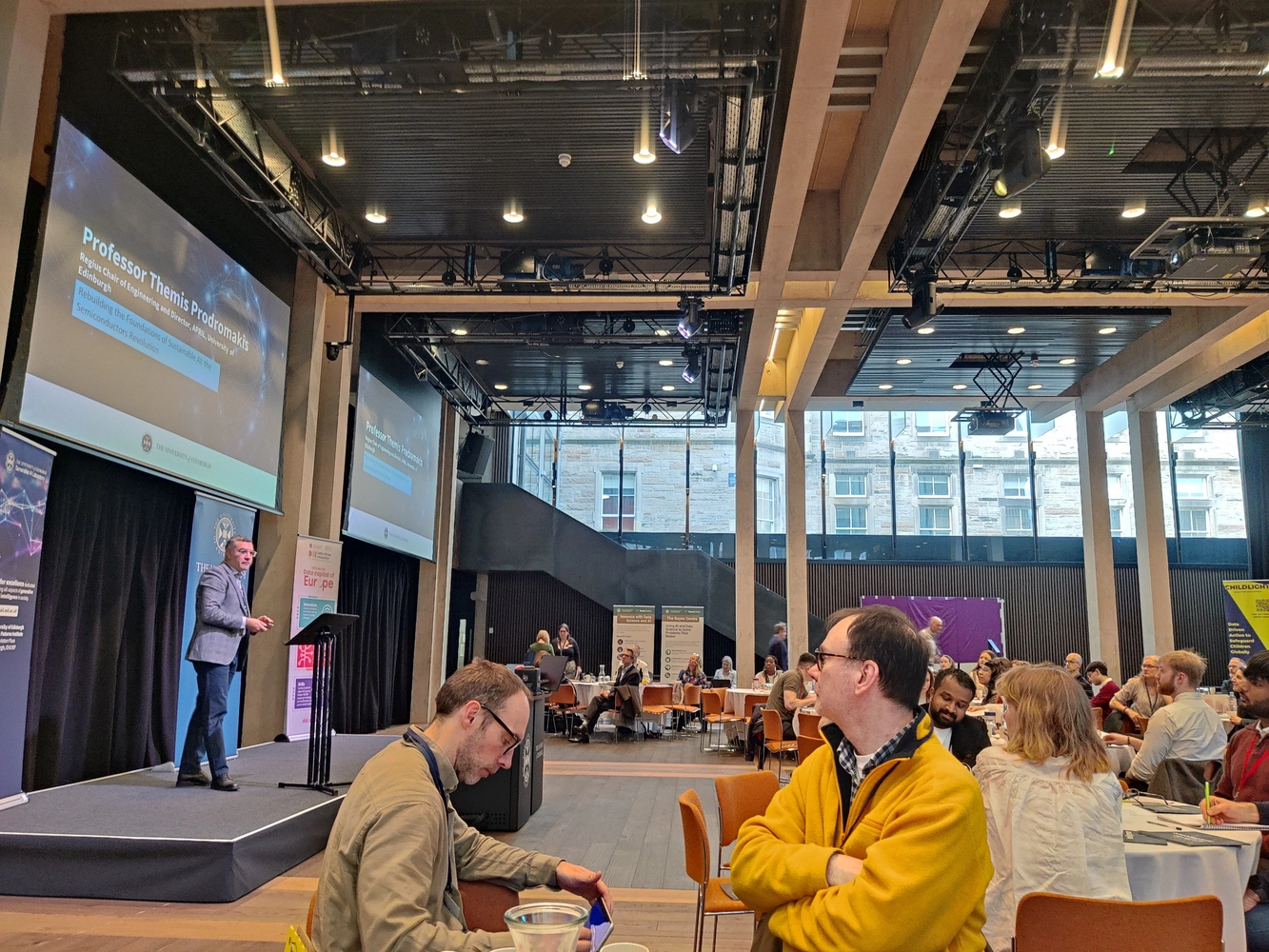
The opening infrastructure session set the tone. Professor Themis Prodromakis spoke to the foundations of sustainable AI and the semiconductor revolution; Professor Mark Parsons made the case for next-generation supercomputing; and Professor Lexi Birch-Mayne explored whether the UK could build its own sovereign AI model, drawing on lessons from EuroLLM. Together, these contributions underlined a simple but often overlooked point: AI adoption depends not only on models but also on the infrastructure, capacity and strategic choices that sit beneath them.
Adoption is an organisational challenge
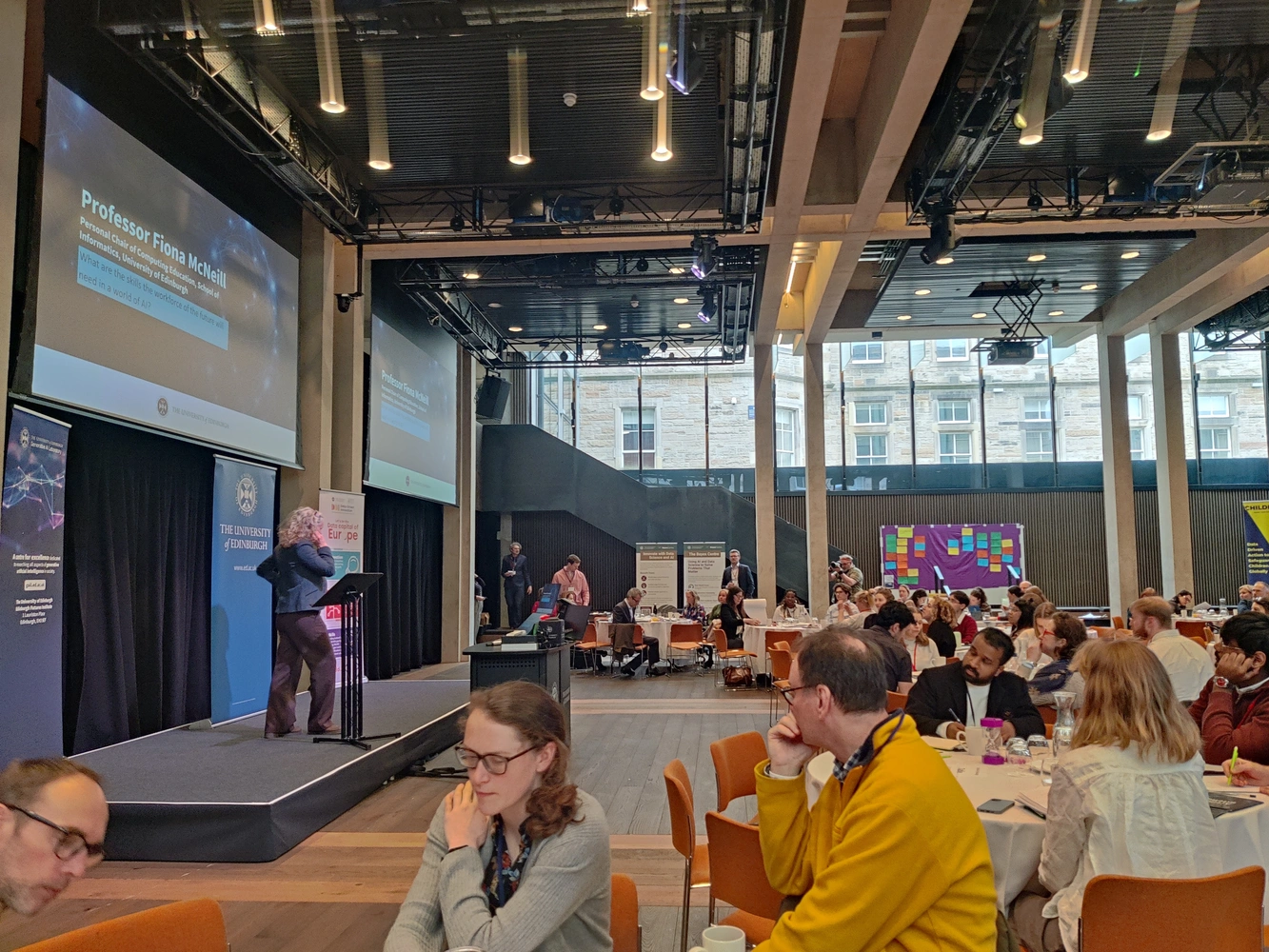
The adoption session brought the discussion closer to organisations themselves. Professor Fiona McNeill addressed the skills future workforces will need in a world of AI, while Theodore Pengelley explored the implications of generative AI and emergent technologies for qualifications and assessment. Jamie Brogan's contribution on climate change planning and Derek McGowan's discussion of a data-led approach to public health in housing showed how data and AI are already being connected to live public-sector challenges.
That framing matters. AI adoption is not just a technical upgrade. It changes workflows, evidence use, decision-making and the skills people need to act confidently on complex information.
From conversation to implementation
The Data & AI Exchange underlined a practical point: the next stage of AI value will come from accountable application. Infrastructure matters. Skills matter. Governance matters. But so does the ability to connect those foundations to everyday organisational problems.
For public bodies, research teams, consultancies and service organisations, one of those problems is clear: how to turn messy, large-scale feedback into insight that is fast, transparent and useful.
That is where GoLLM is focused.
Real value comes from specific applications
The applications session focused on health, with Professor Julie Jacko discussing data- and AI-enabled tools for COPD, Professor Ewen Harrison speaking on clinical applications of AI in the NHS, and Dr Mohsen Khadem exploring how AI is powering surgical procedures. These examples showed where AI becomes most valuable: when it is tied to specific, high-stakes problems and grounded in domain expertise.
Governance is what makes adoption possible
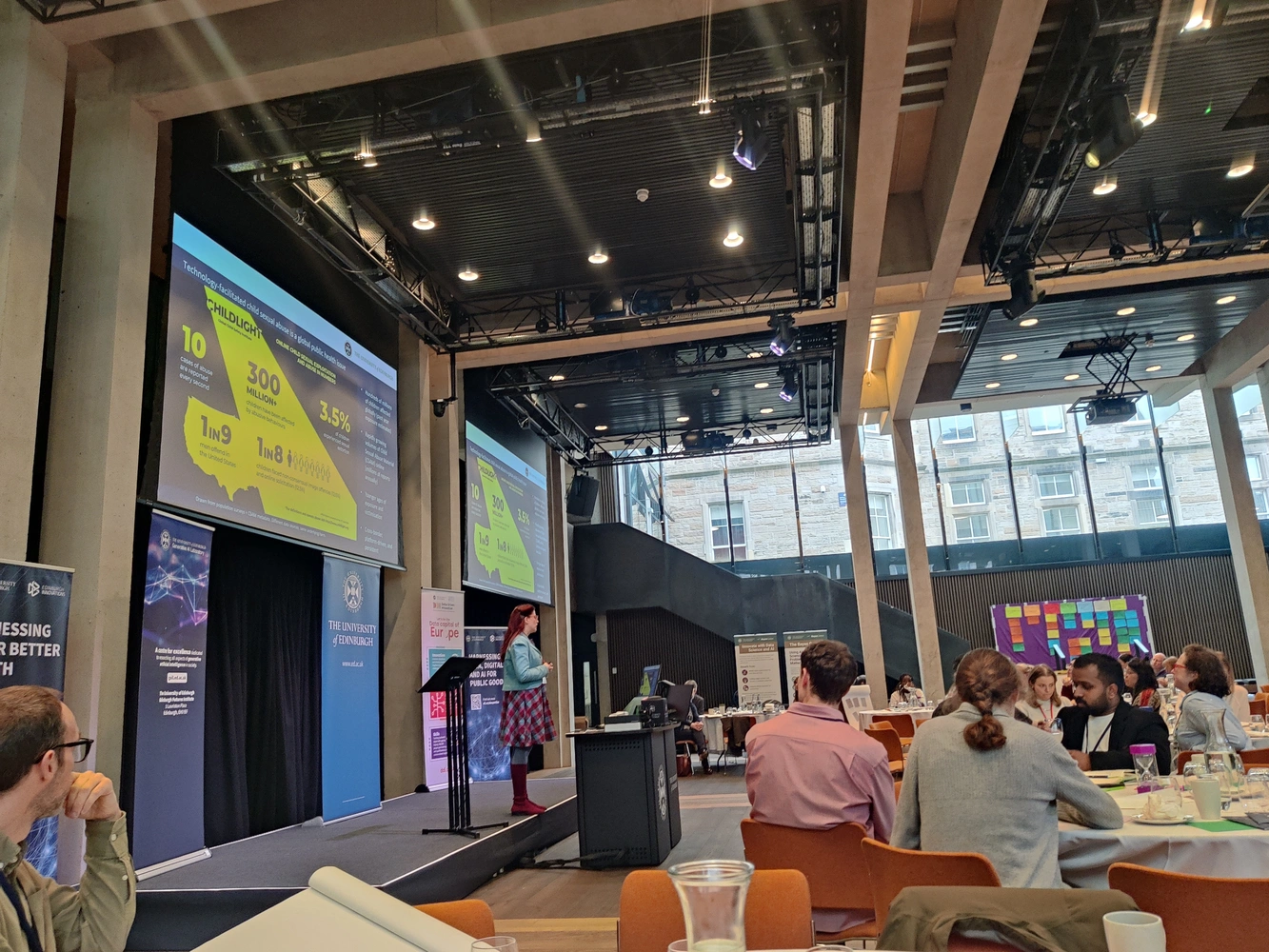
The governance session then turned to the conditions required for public trust. Professor Deborah Fry addressed online safety and safeguarding young people, Morgan Currie considered ethics in government use of data, and Professor Cathie Sudlow focused on safely managing health data to improve treatment and patient outcomes.
This was a useful reminder that responsible AI is not a brake on innovation. It is one of the conditions that allows innovation to be adopted.
Where GoLLM fits
For GoLLM, this is where the conversation becomes especially relevant.
Many organisations already collect large volumes of valuable human-generated data: surveys, consultations, interviews, staff feedback, resident feedback, service-user responses and customer insight. The difficulty is not simply collecting more data. It is turning that material into structured, evidence-led analysis quickly enough to support decisions.
That is the gap D.A.V.E. was built to address.
D.A.V.E. helps organisations move from raw feedback data to clear reporting, thematic analysis, sentiment insight, cohort-level findings and practical recommendations in minutes rather than weeks. The aim is not to add another generic AI tool into the workflow. It is to help teams make better use of the evidence they already hold.
From conversation to implementation
The Data & AI Exchange underlined a practical point: the next stage of AI value will come from accountable application. Infrastructure matters. Skills matter. Governance matters. But so does the ability to connect those foundations to everyday organisational problems.
For public bodies, research teams, consultancies and service organisations, one of those problems is clear: how to turn messy, large-scale feedback into insight that is fast, transparent and useful.
That is where GoLLM is focused.